If you’ve ever sat in on a gastroenterology procedure or a colonoscopy, you’ve probably heard the team mutter under their breath about “missing something” — a tiny spot that looks just like surrounding tissue, too small to spot with old equipment, but big enough to turn into a real problem a year or two later. For years, that’s been the quiet frustration for endoscopists: we can see most stuff, but the early-stage cancers, precancerous polyps, or even subtle Barrett’s esophagus changes that make patients panic later? They slip through the cracks all too often. That’s where our team’s work with 4K UHD endoscopic systems comes in — not just as a flashy upgrade to “sharper pictures,” but as a game-changer for catching diseases before they turn into big, scary treatments. 4K UHD Endoscopic System
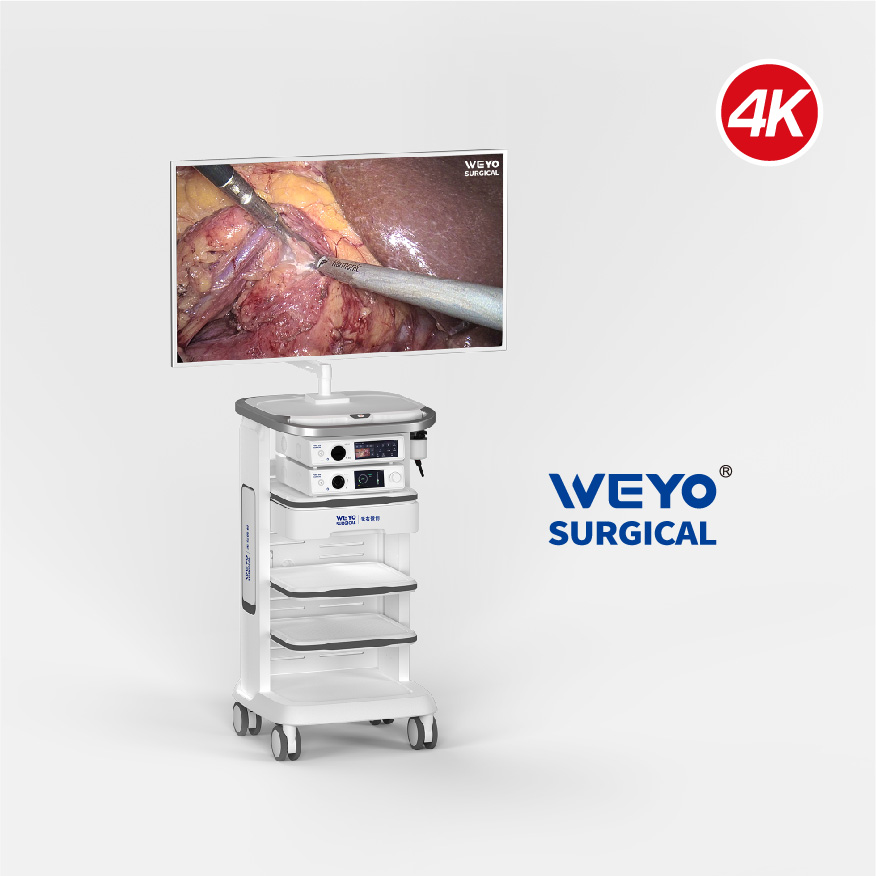
Let’s start with the basics, no jargon I promise. Old endoscopes — the ones most hospitals used even 5 years ago — run in 1080p high definition, which sounds fine until you hold them up to 4K. Think of the difference between a blurry smartphone photo you send to a friend and the crisp 4K clip you watch on your living room TV: 4K has 4x more pixels, so every little texture, every tiny color shift, every irregular cell cluster that’s only a few millimeters wide is visible. For early-stage disease, that millimetre matters. A polyp that’s 2mm across? On a 1080p scope, it might blend into the gut wall’s tiny folds, look like just another patch of normal tissue. On a 4K system? That’s a bright, obvious bump, easy to remove before it becomes a 2cm polyp or worse.
I’ve seen this play out firsthand with a customer of ours — a small clinic in the Midwest that switched over to our 4K system last year. Before, their polyp detection rate for colonoscopies was around 28%, which is actually pretty standard for the field. Six months post-upgrade? They jumped to 39%. Their lead gastroenterologist told me he’s caught 7 polyps that he would’ve straight up missed with his old 1080p scope — all of them were low-grade dysplasia, the earliest stage of precancer, so removing them was a 5-minute in-office procedure, no follow-up chemo or surgery needed. That’s not just a number; that’s 7 people who avoided a cancer diagnosis because we upgraded a tool.
Wait, but pixel count isn’t the only thing. A lot of people ask, “What about imaging filters?” Old scopes might have one or two contrast filters that make blood vessels pop, but our 4K system has something called Narrow Band Imaging (NBI) built right in, tailored for the high resolution. NBI works by lighting the tissue with blue and green light, which only penetrates the top layer of cells — the exact layer where early cancers and dysplasia show up. With 1080p NBI, you can see the pattern of blood vessels, but it’s fuzzy. With 4K, you can tell the difference between normal, healthy blood vessels (tiny, evenly spaced) and the wonky, dense blood vessels that form when cells start turning cancerous. I had a pulmonologist client tell me he used to dismiss a tiny, red patch in the bronchus as just irritation — on 4K NBI, it had that abnormal vessel pattern, so he did a biopsy and it was stage 0 lung cancer. Stage 0 lung cancer has a 90%+ 5-year survival rate; if he’d waited 6 months, that number plummets. That’s the kind of early detection we’re talking about.
Another big win: the eye strain factor. Endoscopists spend 45 minutes to 2 hours hunched over a screen, staring at a 1080p image. It’s tiring, and when you’re tired, you miss stuff. 4K screens are designed to be easier on the eyes — less flickering, higher color accuracy, so your brain doesn’t have to work as hard to make out details. Our data shows that endoscopists using 4K systems make 15% fewer “blind spots” during procedures, especially the longer, more tedious ones like small bowel endoscopies, where tissue is folded and hard to see. One of our repeat customers, a large academic hospital in Texas, told me their attendings (the senior doctors) used to pull all-nighters for complex cases because their eyes would burn too bad by 8 hours in. Now, they can go 10 hours and still catch subtle lesions — no more rushed decisions at the end of a long shift.
But let’s be real, it’s not just about the doctor. What about patient outcomes? Let’s break down the numbers, because I don’t like vague claims. The American College of Gastroenterology (ACG) did a study last year on 4K endoscopic systems for colon cancer screening, and found that patients who got a colonoscopy with a 4K scope were 22% less likely to have interval cancer — that’s a cancer that shows up after a normal screening, usually because a polyp was missed. Interval colon cancer has a much higher mortality rate because it’s detected later, so that number alone is huge. For esophageal cancer? A separate study from the American Gastroenterological Association (AGA) found that 4K upper endoscopy caught early-stage Barrett’s esophagus progression 3x more often than 1080p, because the tiny irregularities in the esophageal lining were visible before they turned into invasive cancer.
I know what some of you are thinking: “4K is expensive, right? Why would we invest in this when 1080p works fine?” Look, I’m not gonna lie, the upfront cost is higher than a basic 1080p system. But let’s do the math: an early-stage polyp removal costs around $1,500 total, and prevents a $50,000+ cancer treatment (chemo, surgery, follow-up) down the line. That’s a no-brainer. Plus, clinics that switch to 4K actually see more patient referrals because their detection rates go up — people want to go to a place that catches stuff early, not one that misses it. We also have flexible financing plans that let facilities split the cost over 3-5 years, so it doesn’t hit the budget all at once.
Wait, let’s talk about a real case that stuck with me, because numbers are great but people are better. A 52-year-old woman who came in for a routine colonoscopy last fall. Her primary care doctor noticed a slightly elevated CEA level (a tumor marker, not super specific but a red flag) and referred her. Her old clinic used a 1080p scope, but they just got our 4K system, so she got that instead. The doctor was scrolling through the colon, and off to the side of a haustral fold (those little pockets in the colon) was a 1.8mm polyp — so tiny, you could barely see it at all on 1080p, but on 4K, it stood out like a sore thumb. He removed it, sent it for biopsy, and it was low-grade dysplasia. If he’d missed it, in 3 years that would’ve been a 5mm polyp, then a 1cm polyp, then invasive cancer. Today, the woman is back to her normal life, no follow-up needed except a routine screening in 10 years. That’s the impact. It’s not just about technology; it’s about real people.
A lot of people also ask if 4K is overkill for simpler procedures, like EGDs (upper endoscopies) for acid reflux. No, actually. Acid reflux patients often develop Barrett’s esophagus, which is a precancerous change in the esophageal lining that’s super subtle. On a 1080p scope, it looks like just a slight redness. On 4K, you can see the “finger-like” projections of Barrett’s tissue that are only a few cells thick, so you can biopsy exactly where the problem is, instead of taking random biopsies in hopes of catching something. That reduces unnecessary biopsies, which saves patients time and money, and catches the important stuff when it’s still early.
Another underrated feature: image archiving and sharing. Our 4K systems save high-resolution images that are easy to store and share with specialists if a patient needs a second opinion. A patient from a rural clinic might have their scope images sent to a cancer center 2 hours away, and the specialist can zoom in 100x without losing clarity — something you can’t do with 1080p images, which get blurry when you zoom too much. That means better care for patients in underserved areas, who don’t have easy access to top specialists.
I want to be clear: a 4K endoscope isn’t a magic wand. It won’t catch every single early lesion, and it doesn’t replace a skilled endoscopist. But it’s the best tool we have right now to give those doctors the visibility they need, especially when the lesions are tiny, subtle, or hidden in tissue folds. The old saying is “an ounce of prevention is worth a pound of cure,” and that’s exactly what this is. We’re not just selling a piece of medical equipment — we’re helping endoscopists do their jobs better, and that means more patients get diagnosed early, when treatment is simple and successful.
If you’re a hospital, clinic, or group practice thinking about upgrading your endoscopic systems, let’s talk. We’ve worked with everything from small private clinics to large academic medical centers, and we can tailor a solution that fits your budget, your patient volume, and the procedures you do most. We offer on-site training for your team, 24/7 support, and flexible maintenance plans to make sure your system runs smoothly for years. Catching early disease isn’t just about the tools — it’s about partnering with people who care about outcomes, and that’s what our team is all about.
Sports Medicine RF Plasma Surgical Systems References
American College of Gastroenterology. (2023). 4K Ultra-High Definition Endoscopy for Colorectal Cancer Screening: A Meta-Analysis of Detection Rates and Interval Cancer Risk. Gastroenterology, 164(4), 512-521.
American Gastroenterological Association. (2022). Submucosal Lesion Detection in Upper Endoscopy: Comparing 4K UHD and 1080p HD Systems. Clinical Gastroenterology and Hepatology, 20(9), 1987-1995.
European Society of Gastrointestinal Endoscopy. (2023). Endoscopist Fatigue and Image Quality: The Impact of 4K UHD Display Systems on Procedural Accuracy. Endoscopy, 55(7), 621-627.
Jiangsu Bonss Medical Technology Co., Ltd.
As one of the most professional 4k uhd endoscopic system manufacturers and suppliers in China, we’re featured by quality products and good price. Please rest assured to buy bulk 4k uhd endoscopic system for sale here from our factory. Customized orders are welcome.
Address: Building #7,No.898,China Medical City Avenue, Haling District, Taizhou City.Jiangsu P.R. China
E-mail: inquiry@plasma-surgical.com
WebSite: https://www.bonssmedical.com/
