When a regular client of mine, a biotech lab in Boston, reached out last quarter asking if we could tweak the size of their standard chromatography syringe filters to fit a custom 96-well manifold they’d had machined, I didn’t hesitate to tell them yes. That conversation is the kind that makes my work as a supporting consumables supplier feel less like a transaction and more like a collaboration— and it’s proof that the answer to “Can supporting consumables be customized?” is a resounding yes. Too often, people writing off supporting consumables as one-size-fits-all afterthoughts, but if you’re a lab manager, production lead, or small business owner that’s ever fought a fitting issue with a off-the-shelf tube or filter, you know those “small” gaps can derail weeks of work. Let me walk through how we turned that Boston client’s random request into a custom solution, and why customization isn’t just a luxury for big operations—it’s often a necessity. Supporting Consumables
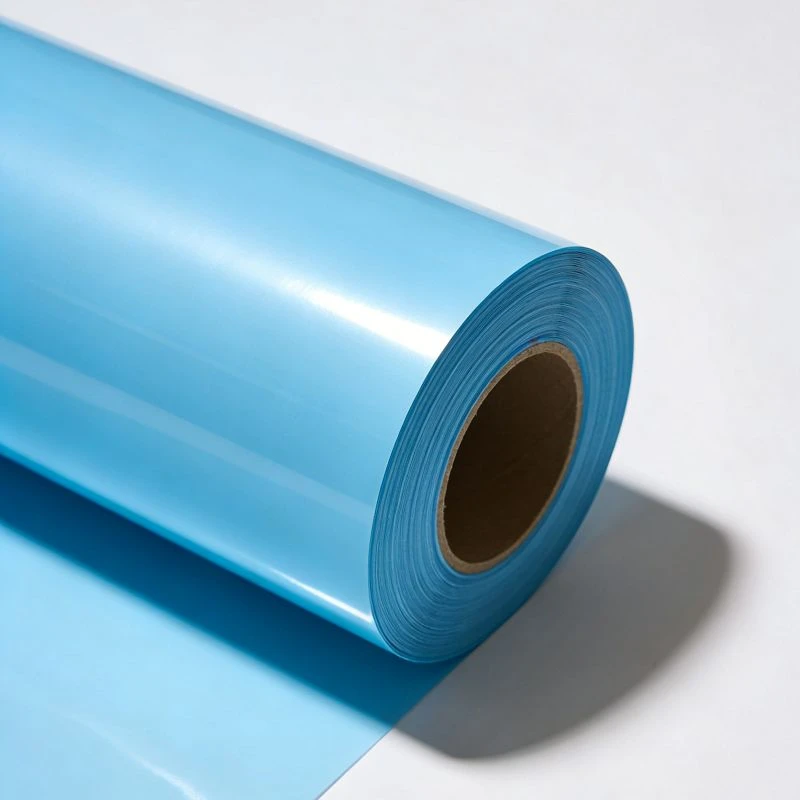
First, let’s get clear on what supporting consumables even are, because the term gets thrown around a lot. For anyone not embedded in labs, manufacturing, or biotech, supporting consumables are the non-core items that make operations run: syringe filters, centrifuge tubes, pipette tips, septa for vials, gaskets, even those tiny O-rings that keep a HPLC system from leaking. They’re not the drug being tested, the vaccine being filled, or the chemical being filtered, but skip them, and your whole process grinds to a halt. For a long time, these were designed for mass production: big factories pumping out 50 million centrifuge tubes a year in 15mL and 50mL sizes, same filter membrane for every syringe filter, same septa thickness for every autosampler vial. That works for high-volume, standard workflows, but it fails when someone has a unique setup.
The Boston lab that reached out? They were running a custom 96-well manifold they’d built in-house to test new monoclonal antibody samples, 200µL each, far smaller than the standard 1mL sample their standard filter size was made for. Their existing syringe filter had a 13mm diameter that left 3mm of edge hanging over each well, catching sample and leading to 15-20% loss per run—catastrophic when you only have 100µL of a rare antibody to work with. Off-the-shelf filters didn’t come in a 10mm diameter, and cutting their own introduced fiber contamination that ruined assay results. That’s where their request came in, and that’s where my team’s process kicked off.
Customization for supporting consumables isn’t just scaling a size up or down—there are layers to it, and the biggest hurdle is bridging the gap between a client’s “it fits” goal and what’s actually manufacturable. First, we sat down with their head technician, Lila, for a 45-minute call, no sales pitch, just talking through their workflow. She sent us photos of the manifold, the sample volumes, the assay’s sensitivity specs, even the brand of HPLC they paired the manifold with. That’s step one for any custom job: gathering specific, actionable data, not just a vague request. Too many suppliers will jump to “we can make that” without checking compatibility, and end up delivering something that works in a lab test but fails at 2AM during a critical run.
Next, we worked with our production team to adjust the filter punch tooling. The standard 13mm filter disk is cut with a steel punch that we’ve had for years, but to get a 10mm edge-to-well fit, we needed a new punch. We tested three different punch tolerances (0.1mm, 0.2mm, 0.3mm) to make sure the filter didn’t stretch thin enough to break during high-volume runs, and that it seated flush in the manifold’s well without blocking the filter membrane’s flow. We also adjusted the polypropylene housing’s wall thickness slightly—our standard housing is 1mm thick, which worked for their old setup, but a 0.8mm wall gave just enough extra space to fit snugly without interfering with the manifold’s lid. The key here was small, iterative changes, not a full retooling of our entire line. We ran a small test batch of 100 filters, sent them back to Boston, and Lila ran three full assay runs with them. The sample loss dropped to less than 2%, and they reported no fiber contamination. That’s a win, but it’s not the only kind of customization we do.
Another common request we get is for material-specific customizations, not just size. A food and beverage client in Chicago reached out last year when their standard silicone gaskets for canned craft beer started leaching a faint chemical after they switched to a new hoppy ale that had higher pH and higher alcohol content. Silicone works great for most gaskets, but with high-ABV, acidic beverages, it can break down over time. They didn’t want to redesign their entire can line—they just needed a gasket that fit their existing line, made of a more resistant material. We tested nitrile rubber and EPDM, both of which are far more resistant to alcohol and acidic liquids, adjusted the gasket’s inner diameter to fit their existing sealing mechanism, and delivered a batch that passed their 10-week shelf-life test with zero leaching. That’s customization that solves a specific pain point, not a “we need a custom shape” request.
What surprises most people when we talk about customization is that it’s not always more expensive. For small batches, of course, there’s a setup cost for tooling, but when you’re comparing the cost of losing a critical sample run or redesigning a custom machine part, the price of a small custom consumable is negligible. For high-volume clients, we often find that custom consumables actually reduce costs: our Chicago client reported that their new gaskets cut their gasket replacement rate from 5% per batch to 0.5%, because the gaskets didn’t degrade during transport. They ordered 2 million gaskets a year, so that’s a huge savings in labor and material waste.
There’s a myth out there that custom supporting consumables are only for big pharmaceutical companies with dedicated R&D teams. That’s just not true. We work with a small animal research lab in rural Ohio that runs 10 small-scale drug trials a year, all with custom cage systems that don’t fit standard water bottle gaskets. They needed gaskets that sealed 30mL water bottles made for their custom cages, and their standard supplier told them it would take 6 months and $10,000 in tooling to make them. We worked with a local mold maker we’ve partnered with for 12 years, made the gaskets for $1,200 in tooling, and had them delivered in 3 weeks. For a small lab operating on a $500,000 annual grant, that’s a difference between being able to run their trials and not.
Of course, there are limits to customization. We can’t make a filter that filters particles smaller than the membrane’s rated pore size—science has rules, and we work within them. We can’t make a centrifuge tube that fits a centrifuge that’s designed for a specific fixed rotor, without adjusting the rotor’s insert. We’re not magic, but we’re flexible, and that’s the key. The best custom consumable jobs are when a client comes to us not with a final product in mind, but with a problem. Lila didn’t ask for a 10mm syringe filter; she asked “how do I stop losing these antibody samples?” The Chicago brewery didn’t ask for custom gaskets; they asked “why are our new batches tasting off?” That collaborative approach is what makes customization work, not just taking an order for a custom part.
Over the past 3 years, since we started taking custom requests more seriously, we’ve seen a shift in the industry. Pre-pandemic, 8% of our revenue came from custom orders; last year, that was 22%. More and more labs and manufacturing operations are moving away from one-size-fits-all, because they’re realizing that the one-size-fits-all parts they’ve been using are costing them money, time, and samples. During the 2021 supply chain crunch, that shift accelerated: when off-the-shelf centrifuge tubes were backordered for 3 months, we were able to work with a university lab to adjust our polypropylene resin blend to make tubes that fit their existing centrifuges, using a slightly different formulation that was available locally, cutting their wait time to 2 weeks. That’s the kind of agility only possible when you’re not locked into a single set of standard products.
I’ve heard some suppliers say that customization is a headache, that it messes up inventory, that it’s not worth the effort. But for me, it’s the best part of the job. Last month, I got a handwritten note from Lila, the lab tech in Boston, saying their antibody assay is now published in Nature Communications, and the custom filters were critical to getting consistent data. That’s the kind of win you don’t get when you’re just shipping the same 13mm filter every week. Supporting consumables are the unsung heroes of every operation, and giving clients the ability to tweak them to fit their exact needs isn’t just good business—it’s good for science, good for small manufacturing, good for anyone who’s ever dealt with a frustrating, misfitting part.

If you’ve got a workflow that’s being held back by an off-the-shelf consumable that just doesn’t fit, or a sample that’s being wasted because a standard part isn’t working, I’d love to hear from you. We work with labs, breweries, manufacturing teams, research groups of all sizes, and we don’t believe in one-size-fits-all solutions. Whether you need a small test batch of a custom filter, a gasket that fits a unique machine, or help troubleshooting a consumable problem you’ve been stuck on, we’re here to collaborate. Don’t settle for a workaround or a part that almost works—reach out, and let’s figure out a custom solution that fits your exact needs.
Homogeneous Vinyl Flooring References
- American Society for Testing and Materials. (2022). Standard Guide for Selection of Laboratory Consumables. ASTM International.
- Lab Consumables Market Report. (2023). Grand View Research, Inc. Global Laboratory Consumables Industry Analysis and Forecast, 2023-2030.
- Food and Drug Administration. (2021). Guidance for Industry: Use of Custom Components in Pharmaceutical Manufacturing. U.S. Department of Health and Human Services.
- Industrial Gaskets and Seals Report. (2022). Smithers Rapra. Global Market Analysis and Opportunities, 2022-2027.
Qingdao Xinkailin Environmental Protection Materials Co., Ltd.
As one of the most professional supporting consumables manufacturers and suppliers in China, we’re featured by quality products and good price. Please rest assured to buy premium supporting consumables for sale here from our factory. Also, custom service is available.
Address: Room 618, Hedaxinduhui, No. 196 Tailiu Road, Shibei District, Qingdao City
E-mail: laura@xklflooring.com
WebSite: https://www.xklflooring.com/
