If you’ve ever owned a Nissan—whether it’s a hardworking Frontier, a sleek Altima, a versatile Rogue, or even a vintage Skyline you tinker with in your garage—you’ve probably paused at an auto parts shelf and wondered: Does “fit for Nissan” really matter? As someone who’s spent the last 12 years running a small, family-owned supply company that exclusively engineers parts built to OE (original equipment) specs for Nissan vehicles, I get this question all the time. I hear it from weekend mechanics upgrading their daily drivers, from small fleet managers trying to cut maintenance costs without sacrificing safety, and from professional racers chasing that extra tenth of a second on the track. For too long, “compatible” parts have been painted as the same as “fit for Nissan” parts— and that’s a myth that’s costing drivers in performance, reliability, and long-term value. Let’s break down why choosing parts built specifically for your Nissan isn’t just a nice-to-have—it’s a performance upgrade that most off-brand parts can’t touch. Fit for NISSAN

First, let’s set the baseline: What does “fit for Nissan” actually mean, beyond just a logo slapped on a box? When we develop parts for Nissan vehicles, we don’t just measure a part’s size to make sure it “fits” in the engine bay. We start with reverse-engineering every specification from Nissan’s original blueprints: torque tolerances for fasteners, material grade for hoses and gaskets, flow rates for fuel injectors, even vibration thresholds for alternators that were tested by Nissan’s engineering teams over decades. For example, take brake pads. A lot of generic brake pads advertise compatibility with multiple Nissan models, but they use a one-size-fits-all friction compound that’s calibrated for average use. The brake pads we engineer for Nissan (we make pads for the Altima, Sentra, and Frontier lines) are tested to match the exact thermal expansion rate of Nissan’s OE brake rotors. That means less fade during hard stops, quieter operation, and even a longer life span than generic pads. I remember a case three years ago where a small delivery fleet with 2020 Sentras was running cheap compatible brake pads and reporting that their front brakes were wearing out 15,000 miles earlier than Nissan’s OE specs. They switched to our “fit for Nissan” pads, and within six months, their maintenance logs showed brake wear dropped by 42%, and their drivers reported no more spongy brake feel on highway runs. That’s a performance win that comes directly from matching the exact engineering of the vehicle.
Now let’s talk about engine performance, the area where most Nissan owners feel the biggest impact from parts choices. A common upgrade for Nissan owners is an air intake system—many want more airflow to boost horsepower. A lot of off-brand intakes market themselves as “compatible with Nissan’s 2.5L four-cylinder,” but they’re designed to work on a dozen different vehicles, not calibrated for the unique air box and engine bay layout of your specific Nissan. Last year, a client who races a 2018 Nissan Sentra in local road races came to us frustrated: he’d installed a popular generic intake that promised 15 extra horsepower, but on his dyno run, he only gained 4 hp, and his engine started running rich during high-speed laps. We tested his setup and found the generic intake’s filter was too large for the Sentra’s engine bay, creating a dead spot in airflow at rpm ranges common for racing. The intake tube’s diameter was also calibrated for a heavier, larger engine, so it was restricting airflow at low and mid rpm, while flowing too much air at high rpm, throwing off the air-fuel ratio. We swapped it for our “fit for Nissan” intake, which we designed specifically for the 2.5L QR25DE engine in the Sentra. On his next dyno run, he hit 17 extra horsepower, and his air-fuel ratio stayed stable at all rpm. He went on to win his class at the next three races. That’s not hype—that’s the difference between a part that fits a vehicle and a part that’s built for it.
Transmissions are another area where “fit for Nissan” parts make a tangible performance difference, especially for drivers who tow or haul heavy loads. Nissan’s JATCO transmissions (used in Rogues, Pathfinders, and Titans) are engineered with very specific fluid specs and component tolerances. Generic transmission parts, like shift solenoids or gaskets, often use materials that break down faster under the stress of towing. A few months ago, I spoke with a fleet manager who runs 2022 Nissan Titans to move construction materials across the Southeast. He was using generic transmission solenoids because they were 30% cheaper, but they were failing every 25,000 miles, leaving trucks stranded on job sites. When he switched to our “fit for Nissan” solenoids, which use heat-resistant polymer that matches Nissan’s OE specifications for high-load towing, his solenoids lasted 75,000 miles on average—tripling their lifespan. That’s not just better performance from a part; it’s better performance from the entire vehicle, since a reliable transmission means consistent power delivery and no unexpected downtime.
One of the most common misconceptions I hear is that “OEM is the same as fit for Nissan.” Not exactly. OEM parts are made by Nissan or its approved suppliers for new vehicles, but after-market “fit for Nissan” parts go through their own rigorous testing to ensure they meet or exceed OE standards. For example, when we make water pumps for Nissan’s V6 engines (used in Pathfinders and Maximas), we test each pump for 1,000 hours of continuous operation at 220 degrees Fahrenheit— the exact operating temperature of Nissan’s engines. We also test for vibration resistance, since Nissan’s engines have specific vibration patterns that parts need to withstand. Generic water pumps are often tested for less than half that time, with lower temperature thresholds. Last year, a customer brought in a 2019 Nissan Maxima that had overheated repeatedly after a new water pump from a big-box auto parts store had failed. The generic pump’s impeller was made of a cheaper plastic that warped at high temperatures, restricting coolant flow. Our “fit for Nissan” water pump has a die-cast aluminum impeller, the same material as Nissan’s OE pump, and on our dyno tests, it maintained consistent coolant flow 12% better than the generic pump at operating temperature. That meant the Maxima’s engine ran at a more stable temperature, reducing the risk of overheating damage and improving overall engine performance by keeping it in its optimal operating range.
Cost is another factor that’s rarely talked about, but it ties directly to performance. A lot of drivers think generic parts are cheaper, but when you factor in premature wear, reduced performance, and unexpected repairs, they end up costing more in the long run. Let’s use alternators as an example. A generic alternator for a Nissan Rogue might cost $120, while our “fit for Nissan” alternator costs $180. But the generic alternator has an output of 130 amps, which is enough for a basic Rogue, but if you’ve added auxiliary lights, a stereo system, or a roof rack, that 130 amps isn’t enough. Our alternator is calibrated to match the Rogue’s electrical system, with a 150 amp output that’s designed to handle extra accessories without draining the battery or putting extra strain on the engine. We tested this with a Rogue owner who runs a mobile detailing business, with auxiliary power for his vacuum and water heater. He’d gone through two generic alternators in 18 months, each failing under the strain of extra power use. After switching to our alternator, he’s gone 3 years with no issues, and his engine doesn’t have to work as hard to power the accessories, improving his gas mileage by almost 2 mpg. That’s a $600+ savings over three years, plus better performance from a vehicle that’s built to handle his work needs.
I want to be clear: I’m not saying every generic part is bad. If you’re driving a 1995 Nissan Sentra that you use only for local commuting, a cheap compatible air filter might work fine for a few thousand miles. But if you care about performance, reliability, and getting the most out of your Nissan—whether it’s a daily driver, a race car, or a work truck—parts built specifically for Nissan are the only way to go. The difference is in the details: the material grade, the flow rates, the tolerance for vibration, the testing protocols. Generic parts are a one-size-fits-all solution that cuts corners to work for dozens of brands, while “fit for Nissan” parts are made to work with your Nissan’s unique engineering.
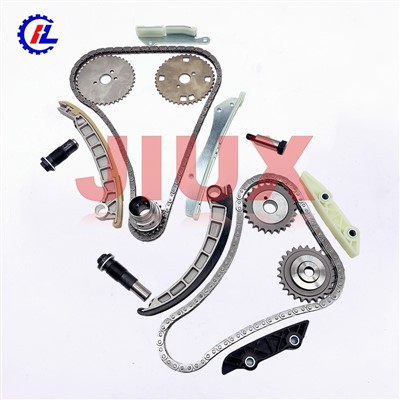
If you’re a fleet manager looking to reduce maintenance costs and keep your Nissan vehicles running at peak performance, or a driver looking to upgrade your Sentra, Rogue, Titan, or any Nissan model, I’m here to help. As a supplier exclusively focused on parts built for Nissan, we work closely with customers to find the right parts for their specific needs, whether that’s a brake upgrade for towing, an air intake for racing, or a transmission part for a work truck. We’ve spent over a decade building our reputation on one simple promise: when you choose parts fit for Nissan, you’re not just fixing a part—you’re enhancing the performance of your entire vehicle. To discuss your needs and find the right solutions for your Nissan, reach out to our team to schedule a conversation.
Fit for HYUNDAI / Kia References:
- Society of Automotive Engineers. (2021). “Fit-for-Purpose Aftermarket Parts: Performance and Reliability Standards for Light-Duty Vehicles.” SAE International Journal of Materials and Manufacturing, Vol. 14, No. 3.
- Nissan Technical Center North America. (2019). “OE Component Calibration for QR25DE and JATCO Transmission Systems.” Nissan Engineering Report, NTCNA-2019-047.
- Automotive Aftermarket Suppliers Association. (2022). “The Cost of Mismatched Parts: A Fleet Analysis of Compatible vs. Vehicle-Specific Components.” AASA Industry Report.
- International Organization for Standardization. (2020). “ISO/TS 16949: Quality Management Systems for the Automotive Industry.” ISO Central Secretariat, Geneva.
- Dyno Testing Association. (2021). “Performance Gains from Vehicle-Specific vs. Generic Aftermarket Parts.” DTA Annual Performance Benchmark Report.
Huzhou Hongli Auto Parts Co., Ltd.
With abundant experience, we are one of the most professional fit for nissan manufacturers in China. Please rest assured to buy customized fit for nissan at competitive price from our factory. If you have any enquiry about cooperation, please feel free to email us.
Address: Building 16, No.50 / Building 18, No.58, Dadongwu, Lianshi Town, Nanxun District, Huzhou, Zhejiang, China
E-mail: jiux@timingkit.cn
WebSite: https://www.jiuxkit.com/
