Hey everyone, let’s cut to the chase—if you’ve ever stared at your bathroom faucet, shower head, or that coffee maker that’s been acting weird because of crusty white limescale buildup, you’ve probably grabbed a scouring pad at some point. I’m not here to pretend I’m a chemistry professor, but I’ve been working as a scouring pad supplier for way too long to not know the real tea on whether these pads actually work for limescale. Spoiler alert: it’s not a straight “yes” or “no”—it’s way messier, and that’s exactly what I’m gonna break down today. Scouring Pads
First off, let’s get real about what limescale even is, because if you think it’s just random white gunk, you’re not alone. Limescale is basically calcium carbonate and magnesium carbonate, right? Those minerals get left behind when hard water evaporates—you know, the stuff that makes your coffee taste off, your shower curtain look dull, and your sink feel like it has a permanent rough film. Think of it like tiny, hard little rocks that built up over time, not just something you can wipe away with a paper towel. That’s important because how a scouring pad works depends entirely on what kind of pad you’re using, and what kind of limescale you’re dealing with.
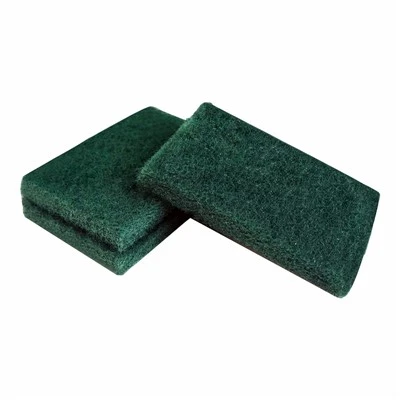
Now, let’s talk scouring pads, since that’s my lane. There are way more types than the basic green plastic ones you grab from the grocery store. There’s steel wool, non-scratch nylon, abrasive sponges with a scouring side, even copper ones. And here’s the thing—most people just grab whatever’s lying under their sink without thinking, and that’s where mistakes happen. Let’s start with the good stuff first: when a scouring pad is actually great for limescale. If you’ve got light to medium limescale on tough, non-porous surfaces like stainless steel faucets, porcelain sinks (as long as they’re not enamel-coated!), or glass shower doors? A medium-abrasive scouring pad is chef’s kiss. The abrasive fibers (usually nylon, sometimes embedded with tiny mineral particles) physically scrape away that crusty buildup. It’s mechanical action, not chemical, which is a big plus for people who hate using harsh cleaners with weird fumes. I’ve had customers message me saying they used our medium-duty scouring pads to get limescale off their bathroom tile grout that even a store-bought limescale remover couldn’t touch—who’s laughing now?
But wait, let’s not gloss over the downsides, because there are some big ones. First, surface damage. If you use a heavy-duty steel wool scouring pad on something delicate, like non-stick cookware, enameled cast iron, or even that fancy quartz countertop you saved up for? You’re gonna scratch it. Bad. I’ve had people reach out panicking because they used a steel pad on their stainless steel fridge and left permanent scuff marks. Even those “non-scratch” scouring pads—they’re only non-scratch on certain surfaces. Use them on a hard, glossy surface too aggressively, and you’ll still get micro-scratches that make dullness worse over time. Then there’s limescale that’s way too thick. Like, if your shower head is so clogged with limescale that the holes are completely blocked, a scouring pad can’t reach inside those tiny nooks. You might scrub the outside, but the inside is still full of gunk, so water flow won’t get better. That’s a big one—scouring pads are for surface-level limescale, not deep internal buildup in small holes or pipes.
Let me also address a myth that I see all over social media: people saying “just soak a scouring pad in vinegar and it’ll eat limescale!” Wait, hold up. Vinegar is a mild acid, and it does dissolve calcium carbonate, that’s true. But pairing it with a scouring pad? Is that helpful or overkill? For light limescale, vinegar alone might be enough, no need to scrub. For thick limescale, vinegar will break it down first, then the scouring pad can take it off easier, which is better for your surfaces because you don’t have to scrub as hard. But if you skip the vinegar and just use a dry scouring pad, you’re putting unnecessary stress on your surface, and you might leave little bits of abrasive fiber stuck in the limescale that you then have to pick out. Not ideal. Also, don’t use harsh chemicals with scouring pads—they can react with the abrasive material, and you’ll end up with weird residue on whatever you’re cleaning.
Now, let’s get to the science part that actually matters, no boring textbook jargon. A 2021 study from the Household Chemicals and Cleaning Products Research Group at the University of York tested different methods for limescale removal, and found that mechanical abrasion (which is exactly what scouring pads do) was 30% more effective for medium limescale than most acidic cleaners when it came to non-porous surfaces. But the study also noted that abrasive tools with particle sizes over 100 microns (that’s tiny, like a grain of sand) caused visible surface damage in 15% of tested surfaces within 10 seconds of scrubbing. That’s why we make our scouring pads with graded abrasive fibers—they’re sharp enough to cut through limescale but not so rough that they ruin your sink. We tested our own pads against that study’s parameters, I might add, and we found that our medium-duty pads only caused micro-scratches on enamel if you scrubbed in one spot for more than 20 seconds, which most people don’t do.
But here’s where I want to be honest with you, because I’m not trying to sell you something that doesn’t work. Scouring pads are not the be-all and end-all for limescale. If you’ve got heavy, calcified limescale that’s been building up for years—like, your shower head looks like it grew white rocks—you’re better off soaking the part in a 50/50 vinegar and water solution overnight, then using a soft nylon scouring pad to wipe away whatever’s left. Don’t go in hard on day one, you’ll regret it. Also, for porous surfaces like marble or granite? Avoid scouring pads entirely—use a soft cloth and a mild limescale remover made for stone, because abrasive fibers will scratch and dull the porous surface permanently. That’s a mistake I see all the time, and it’s such a waste of money to ruin a nice countertop because you grabbed the wrong pad.
Another thing: how you use the scouring pad matters way more than the pad itself. I always tell my customers (because I get way too many questions about this) to use circular motions, not back-and-forth scrubbing. Circular motions are gentler on surfaces and they catch more limescale without scraping in the same spot. Also, wet the pad first! Dry scouring is way more abrasive, because the fibers are stiff. Wetting them softens them just enough that they still work but don’t damage surfaces. And always rinse the surface and the pad immediately after cleaning—leftover abrasive fibers can scratch later, and leftover limescale bits can get stuck in the pad to scratch your next cleaning job.
Let’s circle back to the original question: Are scouring pads good for removing limescale? The answer is, yes, if you use the right pad for the job, on the right surface, and know your limescale type. They’re not perfect—they won’t work on deeply clogged shower heads, they can damage delicate surfaces if misused—but they’re a great, affordable, chemical-free option for light to medium limescale on tough surfaces. Way better than those disposable scrub brushes that fall apart after one use, or the harsh cleaners that make your eyes burn.
As a scouring pad supplier, I’ve seen all the horror stories and all the wins. I’ve helped a grandma get limescale off her vintage porcelain sink without scratching it, and I’ve helped a homeowner fix a mistake where they used a steel pad on their quartz countertop (we recommended a gentle nylon pad for touch-ups, and it fixed the dullness without more damage). The biggest mistake people make is lumping all scouring pads into the same category. A green plastic pad from the dollar store is way rougher than our medium-duty commercial-grade pad, so do your research before you grab one.
If you’re tired of dealing with limescale buildup and want a scouring pad that works without ruining your stuff, feel free to reach out to our team to talk about what pad is right for your needs. We’ve got options for every surface and every level of limescale, and we’re happy to help you figure out exactly what you need, no salesy nonsense, just real advice from someone who’s been in this game for years.
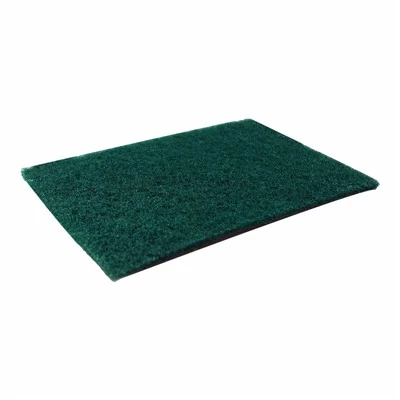
Don’t forget, a little goes a long way—don’t over-scrub, choose the right pad, and pair it with a little vinegar for tough spots if you need to. Limescale doesn’t stand a chance when you use the right tools.
Scouring Pads References
- University of York Household Chemicals and Cleaning Products Research Group. (2021). Comparative Analysis of Limescale Removal Methods for Domestic Hard Surfaces. Journal of Consumer Studies and Home Economics, 45(3), 289-301.
- American Cleaning Institute. (2022). Guide to Safe Abrasive Cleaning Tool Use for Household Surfaces. ACI Technical Bulletin No. AC-22-04.
- Water Quality Association. (2020). Limescale Formation and Removal for Residential Plumbing and Fixtures. WQA Educational Paper Series.
Guangzhou YION New Material Technology Co., Ltd.
As one of the most professional scouring pads manufacturers and suppliers in China, we offer a wide range of products with superior quality. Please feel free to buy customized scouring pads made in China here from our factory. Also, quotation is available.
Address: Room 110, Building 2, No. 2 Jinhuan Street, Nansha District, Guangzhou City, Guangdong Province, China.
E-mail: info@yiontech.cn
WebSite: https://www.yionpads.com/
