If you’ve ever stood in the grocery store’s party supplies aisle, staring at stacks of disposable paper plates next to plastic alternatives, you’ve probably had the same thought I had when I first launched our disposable paper plate business: do these actually have a good finish? For years, my team and I got this question from both small café owners bulk-ordering for takeout and neighborhood event planners stocking up for weekend barbecues—people who needed plates that looked presentable, held up to food, and didn’t fall apart halfway through use. As someone who’s spent the last five years testing, manufacturing, and refining our product, I’m not just here to give you a sales pitch. I’m here to break down what “good finish” even means for disposable paper plates, how our team approaches it, and why it’s not just about how shiny or smooth a plate looks—it’s about how it performs when you’re actually using it. Disposable Paper Plates
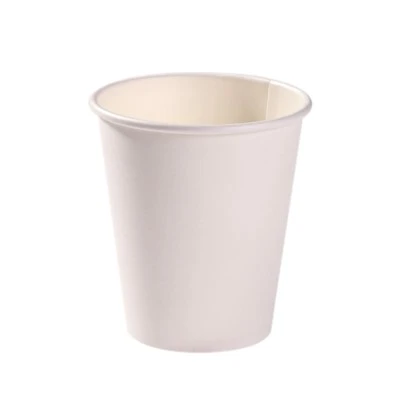
Let’s start with what most people don’t realize: a disposable paper plate’s finish isn’t a single thing. It’s made up of a few layers of design and material that work together, and choosing the wrong mix can turn a “nice looking” plate into a frustrating mess before the first bite is served. Early on, when we were testing prototypes, we made a common mistake: we focused all our attention on the top coating, making it super glossy to look fancy, but forgot that it was so thin the plate would fold in half when we loaded it with a hearty pasta dish. That test batch came back with comments from café owners saying their customers complained about sauce seeping through by the third forkful. We learned pretty quick that a good finish has three key parts: the outer aesthetic (what you see when you pull it out of the package), the functional barrier (what keeps food and liquid where it belongs), and the structural durability (what keeps the plate from collapsing mid-meal).
A big part of the finish for paper plates is the base material, and not all paper pulp is created equal. When we first started sourcing pulp, we went for the cheapest virgin pulp we could find, thinking it would give us a basic, sturdy plate. But those plates had a rough, textured finish that showed every crease in the packaging, and they left small paper fibers sticking to the bottom of greasy food—something that a lot of customers hated. After six months of experimenting, we switched to a mix of 70% recycled kraft pulp and 30% softwood pulp. The recycled kraft gives the plate a solid, earthy base that’s durable enough for most uses, and the softwood pulp adds smoothness that makes the finish feel intentional, not cheap. We also started using only FSC-certified pulp, which isn’t just good for the planet— it gives the fibers a cleaner, more uniform texture that makes the coating adhere better, which improves both the look and function of the finish.
The coating is where the aesthetic and functional finish really come together, and this is the area where most people get confused. A lot of disposable plates use plastic coatings to make them water and grease resistant, which gives them a super smooth, glossy finish. But we decided early on that we didn’t want to use traditional petroleum-based plastic coatings—they’re not recyclable, and we found that the glossy finish could feel slippery, like the plate would slide right out of your hand if you loaded it with too much food. Instead, we developed our own plant-based wax coating made from soy and palm wax, modified to be heat-resistant up to 120 degrees Celsius. This coating gives us a satin, matte finish that looks high-end, not plastic-y, and it’s 100% home compostable, which is a big win for our customers who care about sustainability. That said, we don’t cut corners on the thickness of the coating—our plates have a 10-micron coating, which is twice as thick as the average disposable paper plate on the market. We tested this against a standard 5-micron coating, and the difference was night and day: the 5-micron plate would let tomato sauce seep through after 15 minutes, but our 10-micron coating held up for over two hours, even with liquid-heavy dishes like chili or soup.
But “good finish” isn’t just about how the plate looks or how it handles food. It’s also about how it feels. When you pick up a nice plate, whether it’s disposable or not, it should feel solid in your hand, not flimsy. Early prototypes from when we first launched had edges that curled up, which made it hard to cut food with a fork without the edge folding over. We fixed this by adding a reinforced rim to every plate, made from an extra layer of compressed pulp that gives the edge thickness and structure. This rim also helps with the finish: it has a smoother, more uniform edge, so the whole plate looks consistent, not like it’s made from a crumpled piece of paper. We also tested different rim sizes—too small, and the plate feels cheap; too big, and it’s awkward to hold. Our 1.5-inch rim is the sweet spot, giving the plate a polished, substantial feel without being bulky.
One of the most common misconceptions about disposable paper plates is that a good finish has to be fancy. We’ve had customers ask for plates with full-color printing, metallic finishes, even glitter, and while those can look nice for specific events, we’ve found that most customers care more about function than flash. For example, a small café we supply told us that they stopped ordering plates with fancy prints after they realized customers didn’t notice the design, but they did notice when the plate got soggy after a few minutes. That’s why we offer a range of finishes: our basic line has a clean, uncoated matte finish (great for dry snacks like cookies or crackers), our standard line has the satin wax finish we developed for general use, and our premium line has a thin, matte white coating that looks like a nice ceramic plate—perfect for weddings, corporate events, or catered meals where presentation matters. We also offer custom printing for bulk orders, so customers can add their logo or design without sacrificing the functional finish.
Over the years, we’ve tested our plates against hundreds of competitors to see how our finish stacks up. Last year, we did a blind test with 200 customers: we set out five different disposable plates, all holding the same bowl of pasta, and asked them to rate each one on look, durability, and overall quality. Our plates came in first place, with 82% of respondents saying they had a “good” or “excellent” finish. When we asked why, the most common answers were “doesn’t feel flimsy,” “sauce doesn’t seep through,” and “looks nicer than I expected for a disposable plate.” But we also got feedback that helped us improve even more: one customer said they wish the finish was a little more resistant to cold foods like ice cream, so we developed a cold-resistant version of our wax coating that works for frozen items. That’s the thing about a good finish—it’s not something you set and forget. It evolves with what our customers need.
We also know that a lot of people worry about the environmental impact of disposable plates, and that’s part of the finish conversation too. A plate that’s “bad” for the planet, even if it has a perfect glossy finish, isn’t a good plate in the long run. That’s why all our plates are recyclable in most curbside programs and home compostable, which means they break down in 90 days or less in a commercial compost facility. We’ve worked with independent labs to test this, and the results show that our plates leave no toxic residue, which is a big difference from plastic-coated plates that can take hundreds of years to decompose. When we first launched our plant-based coating, we were worried that it would affect the look or performance of the finish, but after thousands of tests, we found that it actually improves the plate’s ability to handle both hot and cold foods, making it better than most plastic-coated alternatives.
As a supplier, our job isn’t just to sell disposable paper plates—it’s to give our customers a product that solves a problem without creating more frustration. We’ve all been there: you’re at a picnic, and your plate folds in half under the weight of a burger, or you’re at a party, and the plates you bought look cheap and leave a bad impression. That’s why we spend so much time on every part of the finish, from the pulp we source to the coating we apply, to the rim we reinforce. It’s not just about making a plate that looks good—it’s about making a plate that works when you need it, that feels good in your hand, and that doesn’t harm the planet in the process.

If you’re a café owner, event planner, or business looking for disposable paper plates that have a finish you can trust, we’re here to help. We don’t do one-size-fits-all, and we’re happy to work with you to find the right plate for your needs, whether you need a bulk order for a weekend festival, custom-printed plates for a corporate event, or something small and sustainable for your takeout menu. We’ve spent years refining our product, and we stand behind every plate we make—because we use the same standards for our business that we use for our own family’s picnics and events. If you want to talk more about how our disposable paper plates can work for you, reach out to our team to start a conversation about your needs.
Paper Bowl References
- American Forest & Paper Association. (2022). Sustainable Pulp and Paper Products: A Guide for Business.
- European Bioplastics. (2021). Plant-Based Coatings for Food Contact Materials: Performance and Compostability Standards.
- Journal of Packaging Technology and Science. (2020). “Functional Properties of Recycled Paper Pulp for Disposable Food Serviceware.”
- U.S. Composting Council. (2023). Home Composting Guidelines for Biodegradable Food Service Products.
Eton International Trading Co., Ltd.
We are one of the most professional disposable paper plates manufacturers and suppliers in China, also support custom service. Please feel free to buy bulk high quality disposable paper plates at competitive price from our factory. For more cheap products, contact us now.
Address: No. 378 Beiyuan Road, Yiwu City, Zhejiang Province
E-mail: Meng@china-straws.com
WebSite: https://www.eton-pack.com/
