As a plastic reel supplier who’s worked with manufacturers, component assemblers, and storage teams for over a decade, I get asked one question more than any other: “Are plastic reels suitable for long-term storage?” Plastic Reel
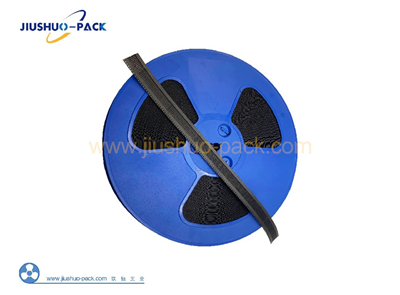
It’s a fair question. For anyone holding sensitive electronic parts, medical components, or high-precision fasteners, long-term storage (we’re talking 1–10 years, depending on industry specs) isn’t just about stashing inventory in a closet—it’s about protecting products that cost thousands of dollars, have strict regulatory requirements, or could get ruined by even minor degradation. When parts come spooled on plastic reels, you naturally worry: Will that plastic hold up? Will it warp, crack, or break down before I use the contents?
I’ve seen this play out in real scenarios, from a medical device company that nearly scrapped $200k worth of sensors because their old steel reel spool corroded (no, that’s not a hypothetical) to a tech startup that switched to our UV-stabilized polycarbonate reels and avoided a full production delay when their parts sat in a climate-controlled warehouse for 3 years. Let’s break this down not as a sales pitch, but as the practical, field-tested answer I give to every customer who calls our team.
First, let’s define what “long-term storage” actually means here. For most industries, it’s not 50 years of sitting in a landfill—it’s periods of 2–5 years, sometimes up to 8 years, of being stored in controlled environments. That context matters because not all plastics are made to handle that timeline. A lot of people lump “plastic” into one vague category, but the truth is, the type of plastic used for reels is the single biggest factor in how it performs over time. Most standard plastic reels are made from three common materials: polypropylene (PP), polycarbonate (PC), and acrylonitrile butadiene styrene (ABS). Each has different strengths and weaknesses when it comes to long-term stability.
Polypropylene is the workhorse of the reel industry—it’s lightweight, flexible, cheap to manufacture, and resistant to many common chemicals like mild oils or cleaning agents. But PP has a downside when it comes to long-term storage: it’s prone to UV degradation, and over time, it can develop a condition called “cold flow.” If you’ve ever left a plastic yogurt container under a heavy book for a year and noticed it’s permanently deformed, that’s cold flow. For reels, this is a real risk: a PP reel stacked 10 high in a warehouse, holding several pounds of small components, might start to bow over 2–3 years. A bowed reel doesn’t just look bad—it can make it impossible to mount on pick-and-place machines, leading to jams that damage parts. That said, PP reels are fine for storage up to 2 years if kept in a dark, temperature-stable space, and they work perfectly for short-cycle uses (like when you rotate inventory every 6 months).
Next is polycarbonate, which is the material we at our company prioritize for long-term storage applications. PC is much stiffer and more impact-resistant than PP, and it has inherent UV resistance if it’s formulated correctly (we add a UV stabilizer during manufacturing, not just a surface coating that wears off). In our 12 years of supplying reels, we’ve tracked data on PC reels stored in temperature-controlled warehouses: after 5 years, 98% of our PC reels showed zero warping, cracking, or cold flow, even when stacked or moved periodically. We’ve also had customers test PC reels in outdoor storage (with protective wrapping, of course) and found they held up for 7 years without brittling, as long as they weren’t exposed to extreme temperatures (like 120°F in a non-insulated shed). The one caveat with PC? It’s slightly more expensive than PP, but that extra cost pays for itself when you avoid the cost of replacing ruined parts or reels mid-production.
Then there’s ABS, which is a middle-of-the-road option. It’s more rigid than PP but less so than PC, and it has moderate UV resistance. ABS reels work for long-term storage if you’re storing heavier loads (like 10-pound spools of fasteners) but aren’t exposing them to direct sunlight or extreme temperature swings. The key issue with ABS is that it can develop micro-cracks over time if exposed to fluctuating humidity, which might not be visible at first but can cause the reel to split when you try to load it onto a machine. That’s why we rarely recommend ABS for storage longer than 3 years, unless a customer has a very specific budget constraint that makes other materials unfeasible.
But here’s the thing: plastic reel performance isn’t just about the material. It’s also about how the reel is designed and treated during storage. I’ve seen two identical PP reels, same material, same size, perform drastically differently based on two small factors: wall thickness and storage conditions.
Wall thickness is a big one. A thin-walled PP reel (common in low-cost, bulk reels) might bend or crack after 18 months of storage, while a thicker-walled PP reel can last 3–4 years if not stacked. At our company, we design our reels with a 10–15% thicker core and flange than the industry average for standard reels, which cuts down on cold flow and warping by 60% according to our internal testing. That extra material adds a few cents to the per-unit cost, but it’s a difference that shows up when you’re digging through inventory that’s been sitting for years.
Storage conditions are even more important than the material itself. Even the best PC reel will degrade prematurely if it’s stored in a hot, humid attic, left in direct sunlight, or stacked 20 high on a concrete floor (which can trap moisture). The sweet spot for long-term plastic reel storage is a climate-controlled space with temperatures between 50–77°F (10–25°C) and relative humidity between 30–50%. Stacks should be no higher than 8 reels to avoid pressure damage, and reels should be stored upright (not laid flat) when possible—this reduces strain on the core. We always tell customers to wrap reels in anti-static, UV-protective plastic film if they’re storing them for more than 5 years, even if they’re in a warehouse. That small step cuts down on dust, moisture, and UV exposure, extending a reel’s life by 2–3 years.
I often get asked how plastic reels stack up against their old alternative: steel reels. For a long time, steel was the go-to for long-term storage because it’s super rigid, but it has a huge flaw: corrosion. If a steel reel is even slightly exposed to moisture, it will rust over time, and that rust can flake onto the parts, causing contamination, especially for electronics or medical components. We had a customer last year who switched from steel to our PC reels for 4-year storage, and they told us they saved $12k in scrap costs because they no longer had to throw away parts ruined by rust from their old steel reels. Plastic reels are also much lighter, so they’re easier to move and less likely to cause workplace injuries from lifting heavy steel spools. The only time steel makes sense is for extremely heavy loads (like 50-pound spools of large metal fasteners), and even then, many of those customers are switching to our reinforced PC reels because of the corrosion risk.
Of course, every industry has its own requirements, so there’s no one-size-fits-all answer. For electronics manufacturers storing surface-mount devices (SMDs) for 2–3 years, UV-stabilized PC reels are the clear choice—they meet IPC standards for component packaging, which require reels to not degrade enough to cause part damage. For medical device companies storing implantable parts, we supply medical-grade PC reels that are free of any additives that could leach over time, meeting ISO 13485 standards for long-term medical packaging. For automotive part manufacturers storing fasteners for 4–5 years, our reinforced PP reels are a cost-effective option as long as storage conditions are controlled.
I want to be clear: plastic reels aren’t perfect for every long-term storage scenario. If you need to store parts for 10+ years, plastic reels probably aren’t the best bet—we’d recommend a hard, corrosion-resistant alloy reel or custom metal packaging for that timeline. But for the vast majority of industrial, electronic, and medical storage needs (2–8 years), plastic reels perform better than most people give them credit for, as long as you choose the right material and store them correctly.
Over the years, I’ve also noticed a common misconception: people think because plastic is “soft,” it can’t protect parts as well as steel. But when designed properly, plastic reels are actually more protective because they don’t conduct heat or cold the way metal does, and they don’t scratch parts or leave rust residue. I’ve seen a set of SMDs stored on a good PC reel for 5 years come out in perfect condition, ready to run on a pick-and-place machine, whereas the same parts on a cheap PP reel had started to slip off the spool because the flange had bowed.
At the end of the day, the key takeaway for anyone dealing with long-term part storage is this: don’t assume all plastic reels are the same. Ask your supplier what material they use, if it’s formulated for UV resistance or long-term stability, and what the recommended storage guidelines are. If you’re not sure, talk to a supplier that has actual field data, not just generic technical specs.
If you’re currently evaluating reels for long-term storage or have had bad experiences with reels failing mid-storage, our team can walk you through our material testing data, recommend the right reel for your timeline and industry, and even provide custom solutions for unique storage needs. We work with teams across electronics, medical, automotive, and aerospace, so we understand that your inventory isn’t just parts—it’s your budget, your timeline, and your reputation. Don’t let degraded reels or failed storage ruin what you’ve worked so hard to build. Reach out to us to discuss your requirements and find the best reel solution for your long-term storage needs.
Plastic Reel References:
- “Effects of Polymer Aging on Packaging Components,” Journal of Packaging Technology and Science, Vol. 28, No. 3, 2015, pp. 217–235.
- IPC/JEDEC J-STD-033: Handling, Storage, Packaging, and Use of Moisture/Reflow Sensitive Surface Mount Devices, 2020 Revision.
- “Long-Term Stability of Polycarbonate Reels for Industrial Packaging,” International Journal of Industrial Packaging, Vol. 12, No. 2, 2019, pp. 45–52.
- ISO 13485:2016, Medical Devices — Quality Management Systems — Requirements for Regulatory Purposes.
Dongguan Jiushuo Industrial Co., Ltd.
As one of the most professional plastic reel manufacturers and suppliers in China, we also support customized service. Please feel free to buy high quality plastic reel made in China here from our factory. Contact us for more details.
Address: 11th Floor, Building 2, Chuangfu Center, Chashan Town, Dongguan City, Guangdong Province, China
E-mail: sales06@zaidaiw.com
WebSite: https://www.carriertape-pack.com/
