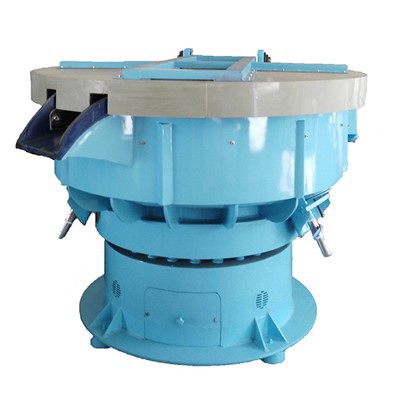
In the industrial manufacturing process, a Grinding Parts Separator plays a crucial role in ensuring the quality and efficiency of production. As a provider of Grinding Parts Separator, I often encounter customers who are unfamiliar with how to adjust the separation parameters of this equipment. In this blog post, I’ll share some practical experiences and key points on this topic. Grinding Parts Separator
Understanding the Basics of Grinding Parts Separator
Before delving into the adjustment of separation parameters, it’s essential to understand the fundamental principles of a Grinding Parts Separator. This machine is designed to separate different components from the ground materials, such as separating metal particles from non – metal debris, or distinguishing different sizes of particles. The basic working process usually involves using physical forces like gravity, centrifugal force, and magnetic force to achieve separation.
The main components of a Grinding Parts Separator include the feeding system, separation chamber, and discharging system. The feeding system is responsible for delivering the ground materials into the separator at a stable rate. The separation chamber is where the actual separation process occurs, and the discharging system outputs the separated components respectively.
Key Separation Parameters and Their Impact
1. Separation Speed
The separation speed is a critical parameter in the operation of a Grinding Parts Separator. It refers to the rotational speed of the separation mechanism, such as the rotor in a centrifugal separator. A higher separation speed can generally provide stronger centrifugal force, which is beneficial for separating fine particles or particles with similar densities. However, an overly high speed may cause some problems, such as excessive wear on the equipment and an increased risk of damage to the particles themselves.
Conversely, a lower separation speed may result in incomplete separation. If the speed is too slow, the particles may not experience enough force to be effectively separated, causing some particles that should be separated to remain mixed. Therefore, adjusting the separation speed requires a balance based on the characteristics of the grinding parts, such as particle size, density, and shape.
2. Feeding Rate
The feeding rate is another important parameter. It determines the amount of grinding parts entering the separator per unit time. If the feeding rate is too high, the separator may be overloaded, leading to poor separation efficiency. The excessive amount of materials may not have enough time to be fully separated in the separation chamber, causing the separated components to still be mixed.
On the other hand, if the feeding rate is too low, the production efficiency will be significantly affected. The equipment is not operating at its optimal capacity, resulting in wasted resources and increased production costs. To adjust the feeding rate, we can usually adjust the speed of the feeding device, such as a conveyor belt or a screw feeder.
3. Magnetic Field Strength (for Magnetic Separators)
For grinding parts separators that use magnetic force for separation, the magnetic field strength is a key parameter. The magnetic field strength determines the magnetic force acting on the magnetic particles in the grinding parts. A stronger magnetic field can effectively attract more magnetic particles, but it may also attract some non – magnetic particles with weak magnetic properties, reducing the purity of the separated magnetic components.
A weaker magnetic field may not be able to attract all the magnetic particles, causing magnetic particles to be discharged with non – magnetic components. Therefore, when adjusting the magnetic field strength, we need to consider the magnetic properties of the grinding parts, including the type of magnetic material, its content, and the magnetic susceptibility.
4. Screen Mesh Size (for Size – Based Separators)
In the case of separators that separate particles based on size, the screen mesh size is a decisive parameter. The screen mesh size determines the maximum particle size that can pass through the screen. If the screen mesh size is too large, particles that are supposed to be retained on the screen may pass through, resulting in poor separation of different particle sizes.
Conversely, if the screen mesh size is too small, the screening efficiency will be low, and the screen may be easily blocked by particles. When choosing the screen mesh size, we need to have a clear understanding of the particle size distribution of the grinding parts and the required separation accuracy.
Step – by – Step Guide to Adjusting Separation Parameters
1. Analyze the Characteristics of Grinding Parts
Before adjusting the separation parameters, we need to conduct a detailed analysis of the grinding parts. This includes determining the particle size distribution, density, magnetic properties (if applicable), and shape of the particles. We can use particle size analyzers, density meters, and magnetic property testing instruments to obtain accurate data.
For example, if we are dealing with a mixture of metal and non – metal particles, we need to know the proportion of metal particles, their magnetic properties, and the size range of both metal and non – metal particles. This information will serve as the basis for parameter adjustment.
2. Start with the Default Settings
Most Grinding Parts Separators come with default separation parameters set by the manufacturer. These settings are usually based on general application scenarios and can provide a starting point for adjustment. We can first operate the separator with the default settings and observe the separation effect.
For instance, we can check if the separated components meet the basic quality requirements, such as the purity of the separated metal particles or the particle size distribution of the separated non – metal debris. If the separation effect is close to the requirements, we can make minor adjustments to optimize the result.
3. Adjust the Separation Speed
Based on the analysis of the grinding parts and the initial observation of the separation effect, we can start to adjust the separation speed. If the separation is incomplete and the particles are not well – separated, we can gradually increase the speed. However, we should increase the speed in small increments and observe the changes in the separation effect after each adjustment.
During the adjustment process, we also need to pay attention to the operating status of the equipment. If we notice abnormal noises, vibrations, or excessive temperature rise, it may indicate that the speed is too high, and we need to reduce it immediately.
4. Optimize the Feeding Rate
While adjusting the separation speed, we also need to optimize the feeding rate. We can start by slightly reducing or increasing the feeding rate and observe how it affects the separation efficiency. If the separation efficiency improves after reducing the feeding rate, it means that the original feeding rate was too high.
We can continue to adjust the feeding rate until we find the optimal value that can ensure both high separation efficiency and production capacity. It’s important to note that the feeding rate adjustment should be coordinated with the separation speed adjustment, as they are interrelated parameters.
5. Fine – tune Other Parameters
For magnetic separators, we can fine – tune the magnetic field strength according to the magnetic properties of the grinding parts and the separation effect. For size – based separators, we can replace the screen mesh if the current mesh size is not suitable.
After each adjustment, we need to conduct multiple tests to ensure the stability and repeatability of the separation effect. We can collect samples of the separated components and analyze them using appropriate testing methods to verify the accuracy of the separation.
Troubleshooting during Parameter Adjustment
In the process of adjusting the separation parameters, we may encounter some problems. Here are some common issues and their solutions:
1. Poor Separation Efficiency
If the separation efficiency is low, it may be due to an improper combination of separation speed and feeding rate. We can try to reduce the feeding rate and increase the separation speed. Additionally, check if the screen mesh is blocked (for size – based separators) or if the magnetic field strength is appropriate (for magnetic separators).
2. Excessive Wear on the Equipment
Excessive wear on the equipment may be caused by a too – high separation speed. We should reduce the speed to an appropriate level. Also, make sure the equipment is properly lubricated and the parts are installed correctly.
3. Unstable Discharging
Unstable discharging may be related to the feeding rate or the operation of the discharging system. Check if the feeding rate is stable. If the discharging system has a blockage, clean it in time.
Conclusion
Adjusting the separation parameters of a Grinding Parts Separator is a complex but crucial process. It requires a deep understanding of the equipment principle, the characteristics of the grinding parts, and careful parameter adjustment. By following the steps and methods mentioned above, we can achieve optimal separation results and improve the production efficiency and product quality.
Grinding Polishing Machine As a professional Grinding Parts Separator provider, we have rich experience and advanced technology in this field. If you have any questions about the adjustment of separation parameters or are interested in purchasing our Grinding Parts Separators, please feel free to contact us for further discussion and cooperation. We are committed to providing you with the best solutions and high – quality products.
References
- Smith, J. (2018). Industrial Separation Technology. New York: Wiley.
- Brown, A. (2019). Principles of Particle Separation. London: Elsevier.
- Chen, L. (2020). Advances in Grinding Parts Separation. Beijing: Science Press.
Dongguan Xindingsheng Intelligent Grinding Technology Co., Ltd.
Dongguan Xindingsheng Intelligent Grinding Technology Co., Ltd. is one of the most reliable grinding parts separator manufacturers and suppliers in China, also supports customized service. Please feel free to wholesale bulk high quality grinding parts separator in stock here from our factory. Contact us for pricelist.
Address: Room 101, Building 1, No. 73 Dahuangmei Road, Dalingshan Town, Dongguan City, Guangdong Province, China
E-mail: cndskj@126.com
WebSite: https://www.xdsfinishing.com/
