Hey there! I’m running a stamping small parts business, and today I wanna chat about the common stamping operations for circular small parts. As someone who’s been in this industry for a while, I’ve seen it all, and I’m excited to share my knowledge with you. Stamping Small Parts

Blanking
Let’s start with blanking. This is one of the most basic stamping operations for circular small parts. Blanking is all about cutting out a circular piece from a larger sheet of metal. You use a punch and a die, and when you apply pressure, the punch goes through the metal, and you get your nice, clean circular blank.
The key here is to have a well – designed die. The die needs to be sharp and precise. If the die isn’t right, you might end up with rough edges on your circular part. And trust me, rough edges are a no – no in most applications. For example, if you’re making circular parts for a watch, those parts need to fit together perfectly, and rough edges can mess that up.
Blanking is great because it’s relatively simple and can be done quickly. You can set up a stamping press to do multiple blanks at once, which really boosts productivity. And since it’s a common operation, the equipment and tools are widely available, so you don’t have to break the bank to get started.
Piercing
Next up is piercing. Piercing is different from blanking in that instead of cutting out a whole circular piece, you’re making a hole in the metal. This is super useful when you need to create circular holes in your small parts. Maybe you’re making a circular washer, and you need a hole in the middle for a bolt to go through.
When you’re piercing, you also use a punch and a die. The punch is smaller than the piece of metal you’re working on, and it punches through to create the hole. Just like with blanking, the quality of the die matters a lot. A dull die can cause the edges of the hole to be ragged, and that can affect how well the part fits with other components.
One thing to keep in mind with piercing is the size of the hole. You need to make sure the hole is the right diameter for your application. If it’s too small, the bolt or whatever you’re using won’t fit. If it’s too big, the part might not hold together properly.
Bending
Bending is another important stamping operation for circular small parts. Sometimes, you don’t just want a flat circular piece. You might need it to be bent into a certain shape. For example, you could be making a circular clip, and you need to bend the edges to create a spring – like effect.
Bending is a bit more tricky than blanking or piercing. You need to control the amount of force you apply and the angle of the bend. If you bend the part too much, it might break. If you don’t bend it enough, it won’t work as intended.
There are different methods of bending. You can use a press brake, which is a common tool for bending metal. You place the circular part in the press brake, and it bends the metal to the desired angle. Another method is roll bending, which is great for creating curved circular parts.
Coining
Coining is a stamping operation that’s used to create very precise and detailed features on circular small parts. It’s like giving the part a really high – quality finish. When you coin a part, you use a lot of pressure to compress the metal and create a specific shape or pattern.
For example, if you’re making a circular medallion, you might use coining to create a detailed design on the surface. The die for coining needs to be extremely precise because it’s going to transfer the design onto the metal.
Coining is a bit more expensive than some of the other operations because it requires a lot of pressure and high – quality dies. But the end result is worth it, especially if you’re making parts for high – end products.
Embossing
Embossing is similar to coining, but instead of compressing the metal, you’re raising a design on the surface of the circular part. It’s like creating a 3D effect on the metal. You can use embossing to add logos, text, or decorative patterns to your circular small parts.
The process of embossing involves using a die with the design on it. When you press the die onto the metal, the design is transferred, and you get a raised pattern on the surface. Embossing can really make your parts stand out, especially if you’re in a competitive market.
Progressive Stamping
Progressive stamping is a more advanced way of stamping circular small parts. Instead of doing one operation at a time, you can do multiple operations in a single pass through a stamping press. For example, you could blank, pierce, and bend a circular part all in one go.
This is great for mass – producing circular small parts. It saves time and money because you don’t have to move the part from one machine to another for each operation. However, setting up a progressive stamping die is more complex and expensive. You need to make sure all the operations are coordinated properly so that the final part comes out right.
Quality Control
No matter which stamping operation you’re using, quality control is crucial. You need to make sure that your circular small parts meet the required specifications. This means checking the dimensions, the surface finish, and the overall quality of the part.
You can use various tools for quality control, like calipers to measure the diameter of the circular part, and microscopes to check the surface finish. If you find any defects, you need to figure out what went wrong and fix it. Maybe the die is worn out, or the stamping press needs to be adjusted.
Why Choose Us
As a stamping small parts supplier, we’ve got the experience and the expertise to handle all these stamping operations. We’ve been in the business for years, and we know how to produce high – quality circular small parts.
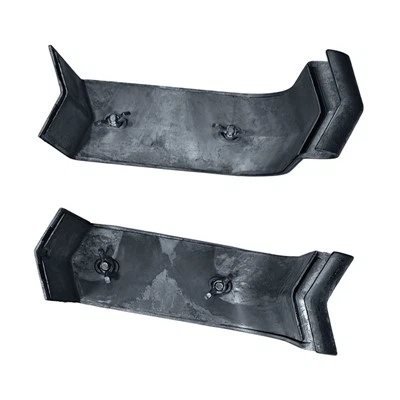
We use the latest equipment and technology to ensure that our parts are accurate and reliable. Our team of experts is always on hand to answer any questions you might have and to help you with your specific needs.
Die Castings If you’re in the market for circular small parts, whether it’s for a small project or a large – scale production, we’d love to hear from you. We can work with you to understand your requirements and come up with the best solution for your business. So, don’t hesitate to reach out and start a conversation about your stamping needs.
References
- ASM Handbook, Volume 14A: Metalworking: Bulk Forming
- Metal Stamping: Processes and Die Design by J. S. Kallend
Yuyao Aozhou Metal Products Co., Ltd.
We are one of the most experienced stamping small parts manufacturers and suppliers in China. With a professional production team, we are able to meet the needs of the majority of our customers. Please rest assured to buy customized stamping small parts made in China here from our factory.
Address: No.6, Nanbailonggang, Wuma Industrial Zone, Lubu Town, Yuyao City
E-mail: xqr-2316@163.com
WebSite: https://www.cnaozhou.com/
