Hey there! I’m a supplier of Fluorosilicone O Rings, and today I wanna chat about how these nifty little things perform when they come into contact with solvents. It’s a topic that’s super important for a lot of industries, so let’s dive right in. Fluorosilicone O Ring
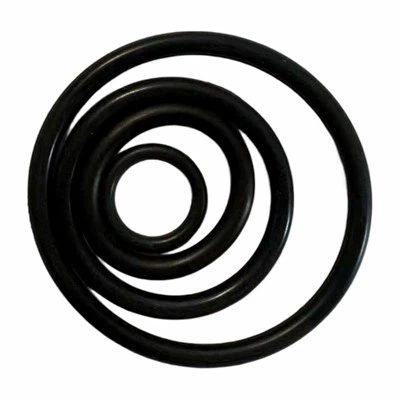
First off, let’s talk a bit about what Fluorosilicone O Rings are. They’re made from a special type of rubber that combines the best of both worlds – the heat resistance of silicone and the chemical resistance of fluorocarbons. This makes them pretty tough cookies in all sorts of environments.
Now, when it comes to solvents, there are a whole bunch of different types out there. Some are polar, some are non – polar, and each one can have a different effect on the Fluorosilicone O Ring.
Let’s start with non – polar solvents. These are solvents like hexane, toluene, and gasoline. Non – polar solvents are known for having weak intermolecular forces. When a Fluorosilicone O Ring comes into contact with a non – polar solvent, it generally holds up pretty well. The fluorosilicone material has a low affinity for non – polar solvents, which means it doesn’t absorb them easily.
For example, in a gasoline storage tank, you’ll often find Fluorosilicone O Rings being used to seal the connections. Gasoline is a non – polar solvent, and the O Rings can withstand its presence without swelling or degrading too much. This is because the molecular structure of fluorosilicone resists the penetration of non – polar molecules. The O Rings maintain their shape and elasticity, which is crucial for a good seal.
But it’s not all sunshine and rainbows. Even though fluorosilicone is resistant to non – polar solvents, long – term exposure can still have some effects. Over time, there might be a slight change in the physical properties of the O Ring. It could become a bit stiffer or lose a bit of its flexibility. However, compared to other types of rubber O Rings, the degradation is much slower.
Now, let’s move on to polar solvents. Polar solvents like water, ethanol, and acetone have stronger intermolecular forces. They can be a bit more tricky for Fluorosilicone O Rings. The polar nature of these solvents can cause the O Rings to absorb some of the solvent molecules.
Take ethanol, for instance. Ethanol is a common polar solvent used in many industries, especially in the food and beverage and pharmaceutical sectors. When a Fluorosilicone O Ring is in contact with ethanol, it might absorb a small amount of the solvent. This can lead to some swelling of the O Ring. The swelling can affect the seal, and if it’s not monitored, it could cause leaks.
But don’t worry too much. Fluorosilicone O Rings are still a great choice for many applications involving polar solvents. They have a certain level of resistance, and in most cases, the swelling is within an acceptable range. You just need to make sure you choose the right grade of fluorosilicone for the specific solvent and application.
Another factor to consider is the temperature. Temperature can have a big impact on how Fluorosilicone O Rings perform in contact with solvents. At higher temperatures, the chemical reactions between the O Ring and the solvent can speed up. For example, if you have a Fluorosilicone O Ring in a hot solvent environment, the rate of absorption of the solvent might increase. This can lead to more significant swelling and degradation of the O Ring.
On the other hand, at lower temperatures, the O Ring might become more brittle. This can make it more prone to cracking, especially if it’s under stress. So, when you’re using Fluorosilicone O Rings in solvent – contact applications, you need to take the temperature into account.
Now, let’s talk about some real – world applications. In the automotive industry, Fluorosilicone O Rings are used in fuel systems. They’re in contact with gasoline, diesel, and various additives. The O Rings need to be able to withstand the solvents in these fuels without failing. And in most cases, they do a great job. They provide a reliable seal that keeps the fuel from leaking, which is not only important for safety but also for the efficiency of the engine.
In the chemical industry, Fluorosilicone O Rings are used in pipelines and storage tanks. They’re exposed to all sorts of solvents, both polar and non – polar. The O Rings need to be able to resist the corrosive effects of these solvents to prevent leaks and contamination.
In the aerospace industry, Fluorosilicone O Rings are used in hydraulic systems. The hydraulic fluids are often a type of solvent, and the O Rings need to be able to maintain their integrity under high pressures and different temperatures.
So, as you can see, Fluorosilicone O Rings are pretty versatile when it comes to contact with solvents. But how do you know if they’re the right choice for your application? Well, it depends on a few things. You need to consider the type of solvent, the temperature, the pressure, and the duration of exposure.
If you’re not sure, it’s always a good idea to do some testing. You can take a sample of the Fluorosilicone O Ring and expose it to the solvent in a controlled environment. This will give you an idea of how it will perform over time.
As a supplier, I’ve seen firsthand how important it is to choose the right O Ring for the job. That’s why I’m here to help. If you’re in the market for Fluorosilicone O Rings and you’re not sure which ones are best for your solvent – contact application, just reach out. We can have a chat about your specific needs, and I can recommend the right product for you.
Whether you’re in the automotive, chemical, aerospace, or any other industry, we’ve got the Fluorosilicone O Rings that can meet your requirements. We offer a wide range of sizes and grades, so you’re sure to find the perfect fit.
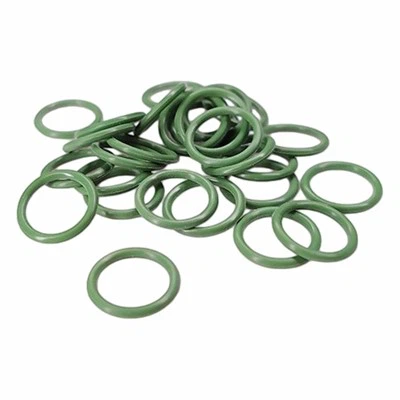
So, if you’re interested in learning more or want to place an order, don’t hesitate to get in touch. We’re here to make sure you get the best – performing Fluorosilicone O Rings for your solvent – contact applications.
Rubber To Metal Bonded Parts References:
- "Handbook of Elastomers" by Jacob K. George and Sabu Thomas
- "Rubber Technology: Compounding, Testing, and Applications" by Michael Morton
Haining Chaoyue Seals Co., Ltd.
As one of the most professional fluorosilicone o ring manufacturers and suppliers in China, we offer a wide range of products with superior quality. Please feel free to wholesale high quality fluorosilicone o ring made in China here from our factory. Also, custom service is available.
Address: Building 9, 158 Lianhong Road, Yuanhua Town, Jiaxing, Zhejiang, China.
E-mail: chaoyue@cyseals.com
WebSite: https://www.hncyseal.com/
